
Livorno, Italy: The Working Port That Opens the Door to Pisa
Livorno doesn't ask to be the star of the show, and most visitors are happy to let it play a supporting role. Tuscany's principal port has always existed to serve somewhere else — first Pisa, then Florence — and that history is written into the city's very layout. But Livorno is far more than a drop-off point: it has its own gritty, unpretentious character, a genuinely excellent market, and one of the most famous monuments on Earth sitting just twenty minutes up the road.
A port built to protect Pisa
Livorno's entire reason for existing traces back to Pisa. In the Middle Ages, Livorno was a small settlement ruled by the Republic of Pisa, and it changed hands several times over the following centuries — sold to Milan in 1399, to Genoa in 1407, and finally to Florence in 1421, under whose rule it remained for the next 300 years. It was the Medici family, Florence's ruling dynasty, who transformed Livorno from a minor fishing settlement into a proper fortified port during the 16th century, ordering the construction of new bastions and defences, many of which still stand today and give the city its distinctive, slightly rugged appearance.
The Medici also made Livorno unusually tolerant for its era, encouraging merchants of different faiths and nationalities to settle and trade there. Communities of Jewish, British, Dutch and German merchants each established their own "nations," or quarters, within the city, and traces of that diversity remain in Livorno's surviving synagogue and Protestant, Anglican and Greek Orthodox churches alongside its Catholic ones. The city took heavy damage during Allied bombing in the Second World War, so much of what's visible in the centre today reflects postwar rebuilding layered over the older fortifications.
Today, Livorno is the third-largest port in Italy, welcoming several hundred thousand cruise passengers a year, second in the country only to Civitavecchia and Venice for cruise traffic. The city itself has a working, industrial edge close to the port, with petrochemical and shipbuilding activity nearby, but venture a little further into the old town and a much prettier, more relaxed place emerges, cut through with the canals of the Fosso Reale.
The area around the port
The immediate surroundings of Livorno's cruise terminal are unmistakably working port rather than postcard Tuscany, and it's worth knowing that going in. The terminal itself sits close to Livorno's Fortezza Vecchia (Old Fortress), a squat, sturdy stronghold with Medici-era walls that's one of the more visible landmarks right at the water's edge, and the port area shares space with container yards, ferry terminals and industrial facilities that reflect Livorno's role as a major commercial harbour rather than a purely cruise-focused one. A shuttle bus typically runs visitors from the terminal into town, since the walk isn't especially scenic and the docks themselves are sizeable, with more than 30 berths spread across roughly 21km of quays. Once past this working fringe, though, the character changes quickly: Via Grande, the city's main thoroughfare lined with shops and cafés, is only a short ride away, and it leads straight into the more atmospheric canals and squares of the old town, including Piazza Cavallotti, where an open-air market adds to the produce on offer at the main Mercato Centrale nearby.
The gateway to Pisa
For nearly every visitor arriving in Livorno, the real destination is Pisa, and the two cities are joined by one of the shortest, easiest transfers of any Mediterranean port call. Pisa sits only around 20km (roughly 20 to 25 minutes) from the port by car, bus or train, making it one of the most convenient major sights reachable from any cruise terminal in Italy.
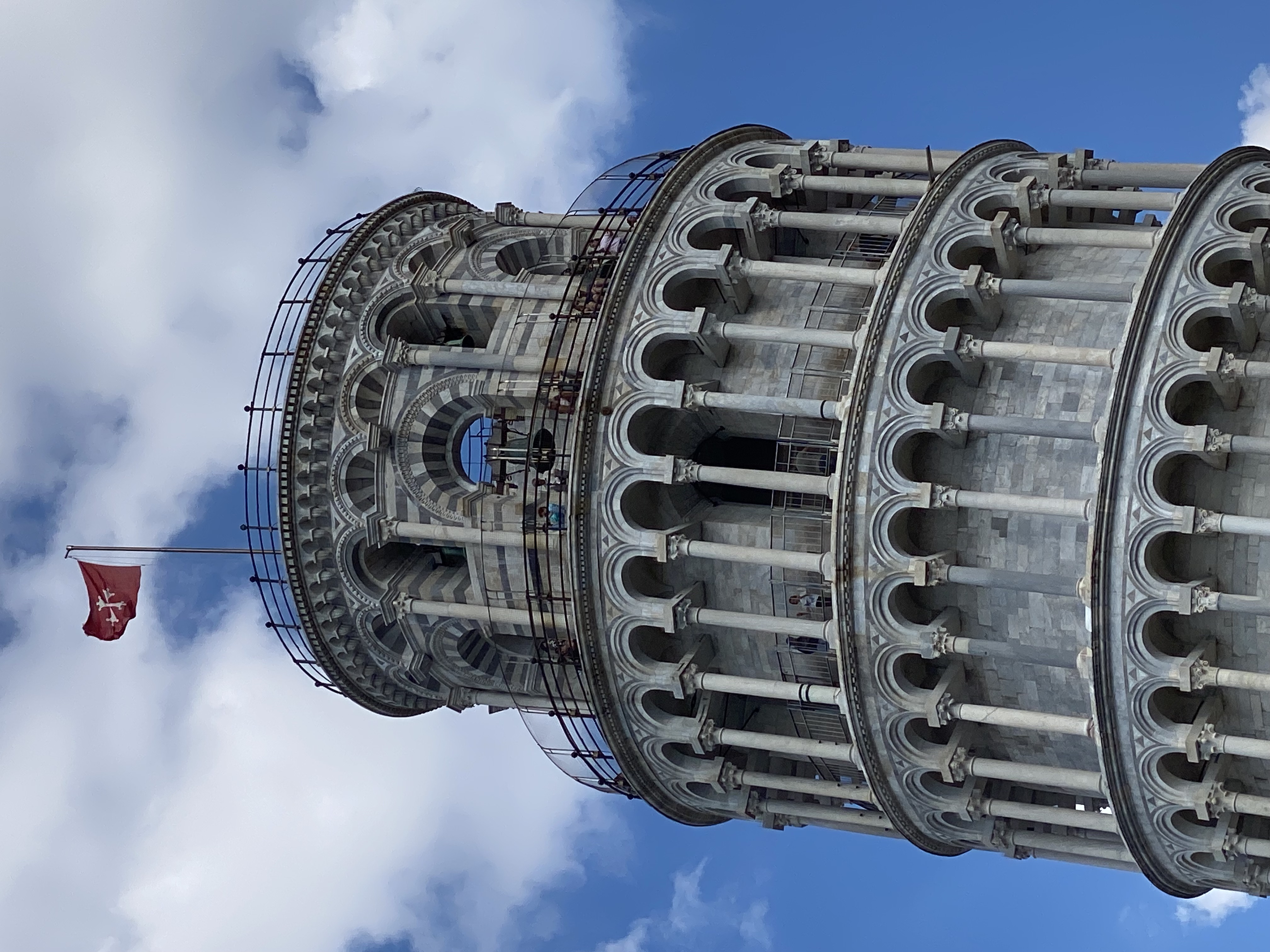
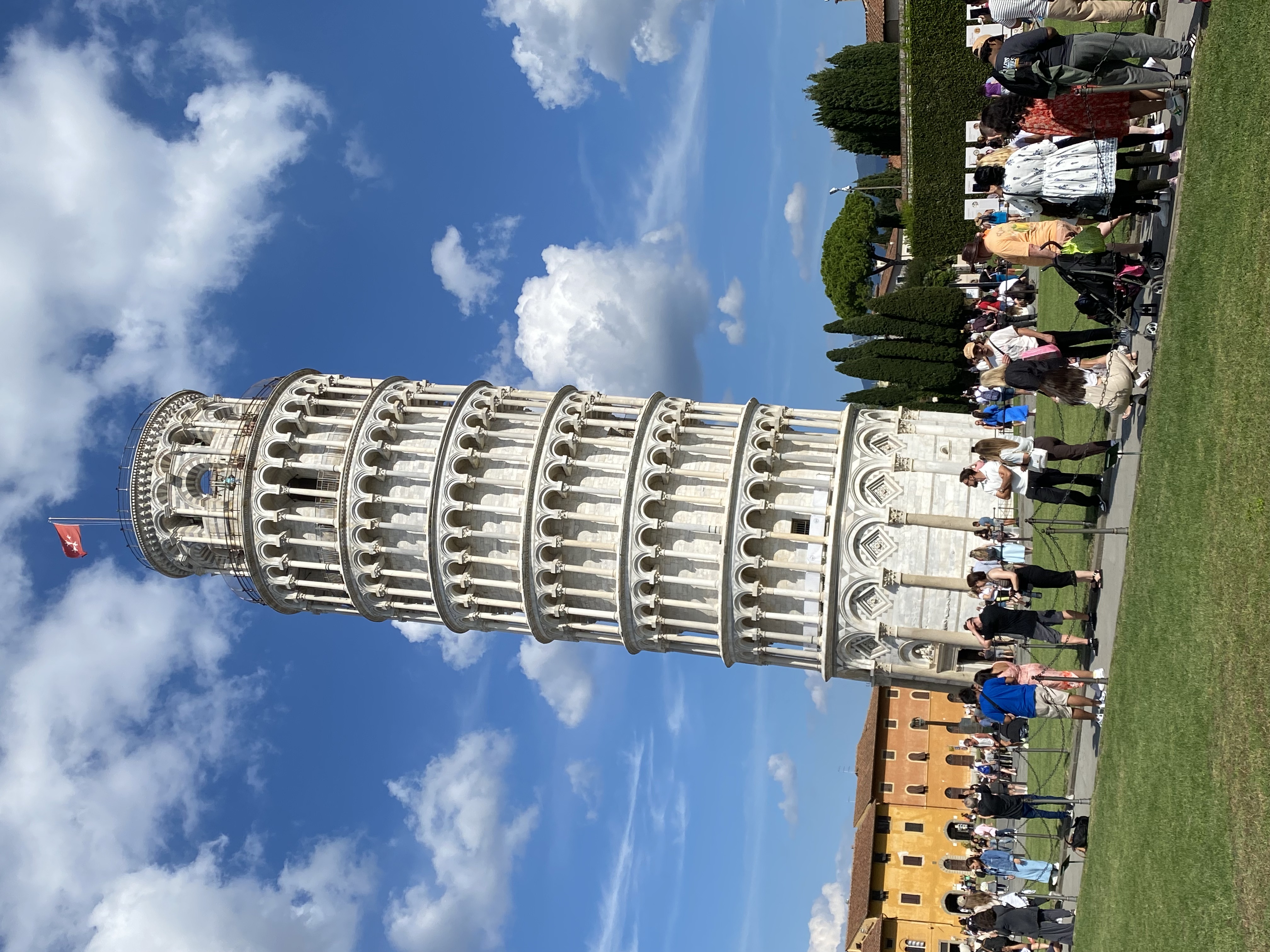
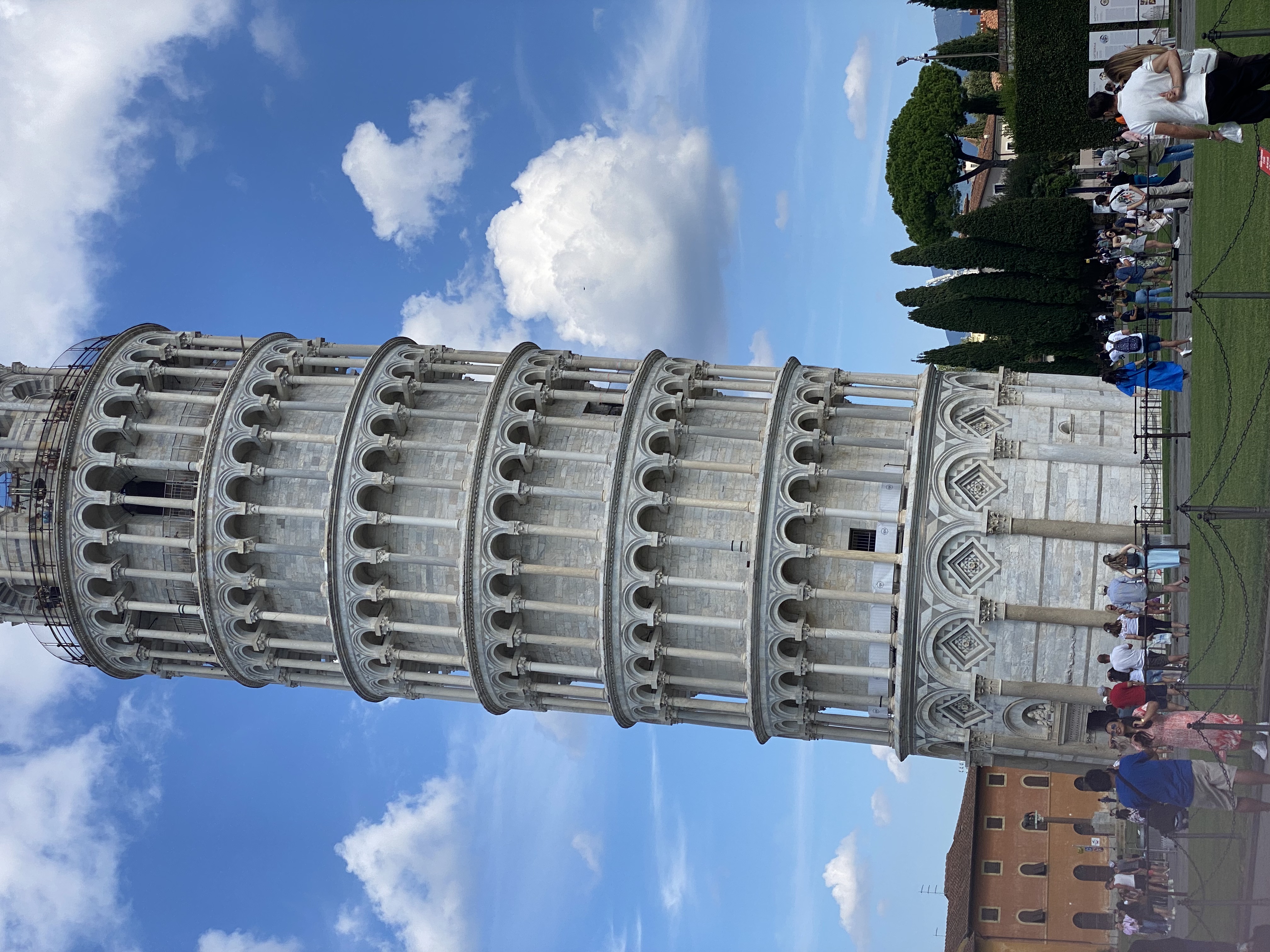
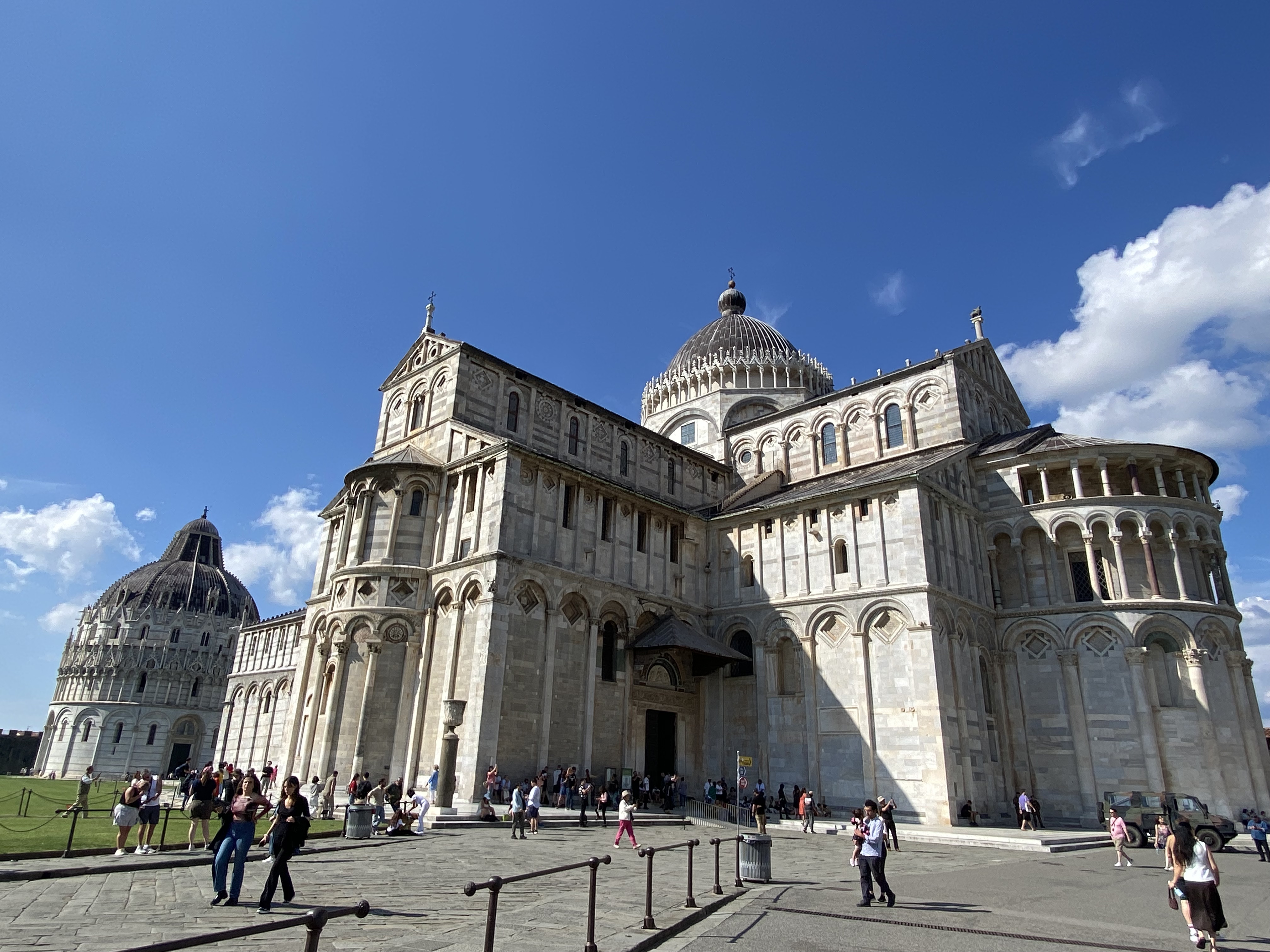
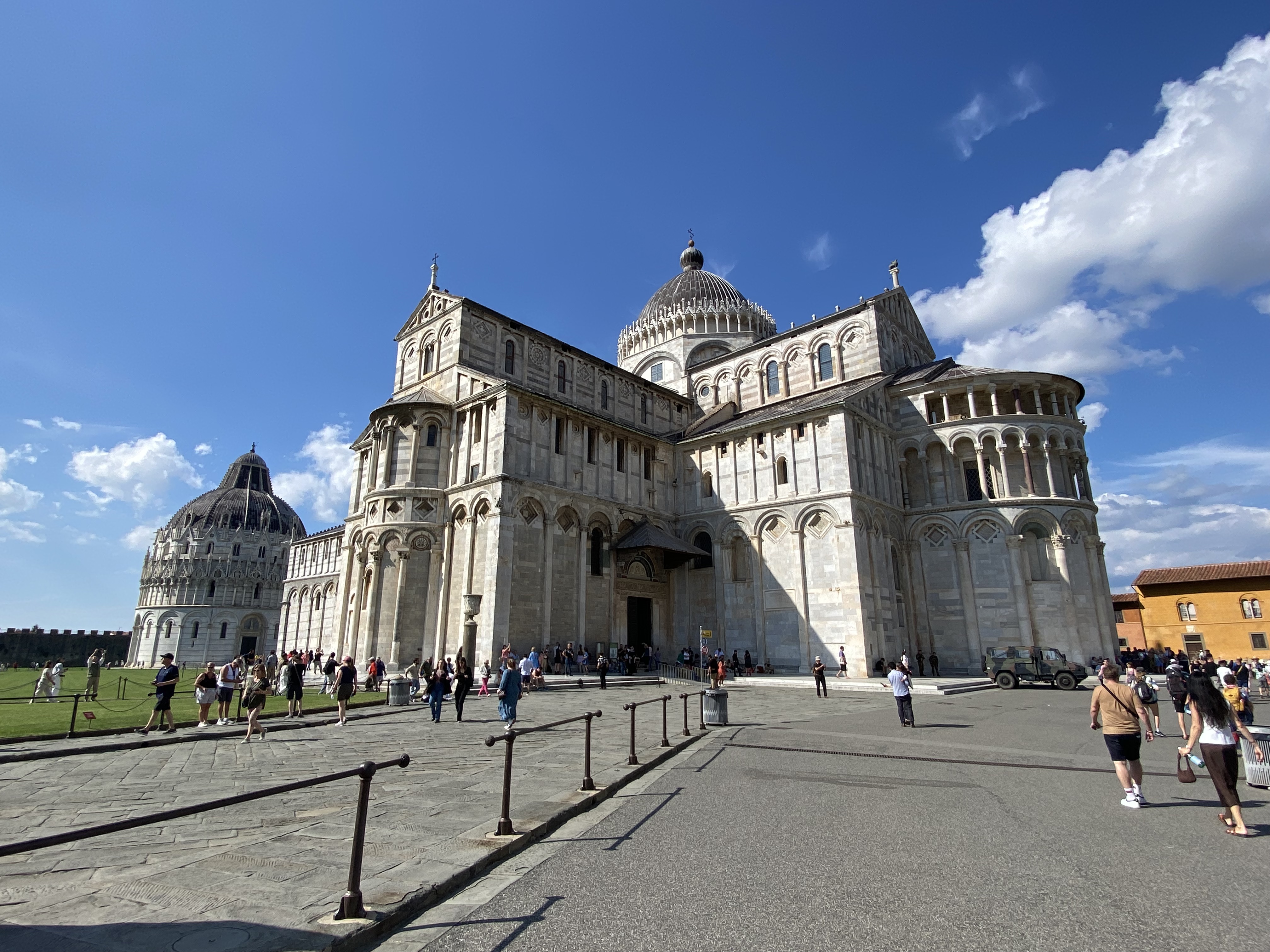
The draw is, of course, the Leaning Tower of Pisa — technically the campanile, or freestanding bell tower, of Pisa Cathedral. Construction began in the 12th century, and the tower began tilting almost immediately as its foundations settled unevenly into the soft ground beneath it, an accident of engineering that turned into one of the most recognisable buildings in the world. The tower stands within the Piazza dei Miracoli, or "Square of Miracles," alongside the cathedral itself, the circular Baptistery, and the Camposanto monumental cemetery — together regarded as one of the finest concentrations of medieval and Romanesque art and architecture in Europe. Pisa's history runs deeper than its famous tilt, too: the city was once a formidable maritime republic in its own right, with a fleet that helped defend Italy's western coastline and later played a role in Roman naval campaigns against Corsica and Sardinia.
Because the transfer is so short, Pisa comfortably suits even a half-day excursion, leaving time to explore the wider historic centre beyond the Piazza dei Miracoli, along the banks of the River Arno.
Florence and Pisa — September 2024


Beyond Pisa: the wider reach of a Livorno call
Pisa may be the headline, but it's far from the only option. Florence, Tuscany's capital, is a little further away at around 90 minutes by car or coach (or a similar journey by train), and rewards a full day with Renaissance art at the Uffizi Gallery, the Duomo, and the atmosphere of a city that shaped the course of Western art. Closer and quieter, Lucca offers a flat, walkable old town still encircled by its original Renaissance walls, popular with cyclists and a favourite for travellers who've already done the bigger sights elsewhere. Further afield, the hilltop towns of San Gimignano and Volterra, the UNESCO-listed centre of Siena, and even the villages of the Cinque Terre are all within striking distance for a full-day excursion, and Tuscany's rolling wine country lies in every direction beyond the port.
The market and local food
Livorno's own culinary claim to fame is best explored at the Mercato Centrale, more properly known as the Mercato delle Vettovaglie. Opened in 1894 and designed by the architect Angiolo Badaloni, it's one of the largest covered markets in Europe, built from iron and glass in a style inspired by the great market halls of Paris, and locals affectionately nickname it "our Louvre." A canal historically ran directly into the building, allowing fishermen to deliver their catch straight to the fish hall — a detail that speaks to just how central seafood is to Livornese cooking.
Wandering the market's aisles brings you past marble fish counters, fresh produce, cured meats, cheeses, and small stalls selling ready-to-eat Tuscan specialities. It's the place to try Livorno's signature dish, cacciucco: a thick, dark fish stew built from octopus, cuttlefish, mantis shrimp and various bony fish, simmered with garlic, chilli, sage and tomato, traditionally served over toasted bread. Look out too for cinque e cinque, a distinctive Livornese street food of chickpea flatbread stuffed inside a bread roll, and torta di ceci, a simple baked chickpea cake sold by the slice. The market is open every day except Sunday, generally from early morning into early afternoon, and arriving early rewards visitors with the freshest catch and the liveliest atmosphere.
Weather in Livorno
Livorno shares Tuscany's broadly Mediterranean climate, with hot, dry summers and mild, wetter winters. July and August regularly bring temperatures into the high 20s and low 30s Celsius, with plenty of sunshine and relatively low rainfall, making midsummer the peak season for cruise calls. Spring and autumn are noticeably milder and generally more comfortable for walking around the old town or making the trip inland to Pisa or Florence, while winters are gentle by northern European standards, rarely dropping to anything severe.
Getting the most from a call at Livorno
Given how little time most cruise passengers spend in Livorno itself, the port's real value lies in what it makes reachable. A shorter call suits a straightforward trip to Pisa's Piazza dei Miracoli and back, with time to spare; a longer day in port opens up Florence, Lucca, or one of Tuscany's hill towns. Either way, it's worth allowing a little time back in Livorno itself before returning to the ship — even a short wander past Via Grande and into the market is enough to get a genuine sense of a Tuscan port city that has spent five centuries quietly getting other places noticed.